All-wheel drive does not always mean that all four wheels receive the same amount of power at every moment.
In many Haldex-equipped vehicles, the drivetrain operates mainly through the front wheels and brings the rear axle into action when extra traction or stability is needed.
That ability to vary torque distribution is what makes the Haldex system useful. Instead of relying only on a mechanical centre differential, it combines sensors, electronic control, and hydraulic pressure to decide how strongly the rear wheels should be connected to the drivetrain.
How a Haldex AWD System Works
At the centre of the system is a multi-plate clutch coupling positioned in the driveline leading to the rear axle. When the clutch plates have little clamping force, most propulsion comes from the front axle. When hydraulic pressure compresses the clutch pack, more torque can be transmitted to the rear wheels.
An electronic control unit manages this process. Modern on-demand AWD couplings use information from the vehicle’s electronic network to calculate how much clutch pressure suits the current driving situation.
BorgWarner, which acquired Haldex Traction Systems in 2011, describes its AWD coupling technology as capable of pre-emptive torque control using onboard vehicle data.
What Tells the System That More Rear-Wheel Torque Is Needed?
Wheel-speed information is one of the most important inputs. If the front tyres begin rotating faster because they are losing grip, the control system can increase pressure in the coupling and direct additional torque rearward.
Later, Haldex systems do not simply wait for obvious wheelspin. Information from engine management and chassis electronics can help the controller anticipate traction demand. SEAT, for example, explains that its Haldex-based system considers wheel-speed data, drive torque, and handling conditions when distributing power.
Throttle position also matters. Hard acceleration from a junction places very different demands on the drivetrain than light motorway cruising. Steering angle, stability-control activity and other vehicle-dynamics data may also influence how the AWD controller responds.
The Pump Creates the Pressure Needed for Torque Transfer
Electronic commands alone cannot clamp the clutch pack. The Haldex pump provides the hydraulic pressure needed to apply the coupling. As pressure rises, the plates are squeezed together more firmly, creating a stronger mechanical connection and allowing more torque to reach the rear axle.
This makes the pump condition important to AWD performance. Worn components, contaminated fluid, or restricted hydraulic passages can reduce the system’s ability to build pressure correctly.
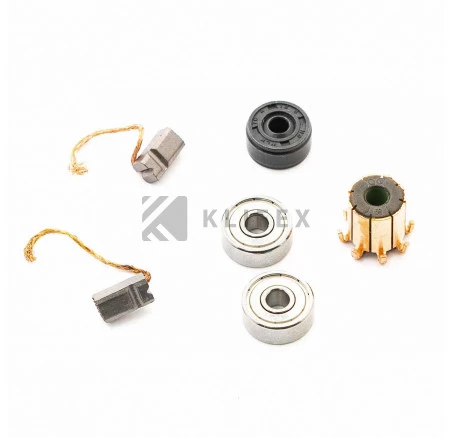
If diagnosis shows that the fault is limited to serviceable pump components rather than the whole coupling, a repair kit of the haldex coupling pump may allow the affected hardware to be repaired without automatically replacing a much larger assembly.
Accurate diagnosis is still essential. Similar symptoms can originate from the pump, wiring, sensors, control module, fluid condition, or clutch mechanism, so replacing parts based only on how the car feels can become expensive.
What Drivers May Notice on the Road
On a dry road at steady speed, a Haldex-equipped car can feel much like a conventional front-wheel-drive vehicle. The difference becomes easier to appreciate when grip or power demand changes.
During brisk acceleration, rear-wheel assistance can help the vehicle put engine torque onto the road more effectively. On wet, snowy, or loose surfaces, the system can respond as the driven wheels approach their traction limit. Its operation also works alongside systems such as ABS and electronic stability control.
The exact response varies by Haldex generation, manufacturer calibration, vehicle model, and driving mode. Two cars using Haldex-based AWD can therefore feel noticeably different despite sharing a broadly similar coupling concept.
Why Maintenance Matters
Because the system depends on hydraulic pressure and electronically controlled components, routine servicing should not be overlooked. Haldex fluid can collect debris from normal clutch operation, while filters or pump screens used on certain generations may become restricted.
Service requirements differ between generations and manufacturers, so owners should follow the maintenance information specified for their exact model rather than applying one universal interval. A workshop with suitable diagnostic equipment can also read AWD-related fault codes and check pump operation before costly components are replaced.
A Smart System Working in the Background
The Haldex system does not treat AWD as a simple on-or-off feature. It uses information about traction, engine demand, and vehicle movement to determine how much rear-axle involvement is appropriate.
For car owners and enthusiasts, understanding that process makes troubleshooting easier. In later systems, the drivetrain can prepare for additional rear-wheel torque before obvious wheelspin occurs, helping the car make better use of available grip while keeping normal driving smooth and efficient.